Track pregnancy & baby growth
- 4.7
- Rating
- 1.00M
- Installs
- Free
- Price

 Analysis by App-foxy
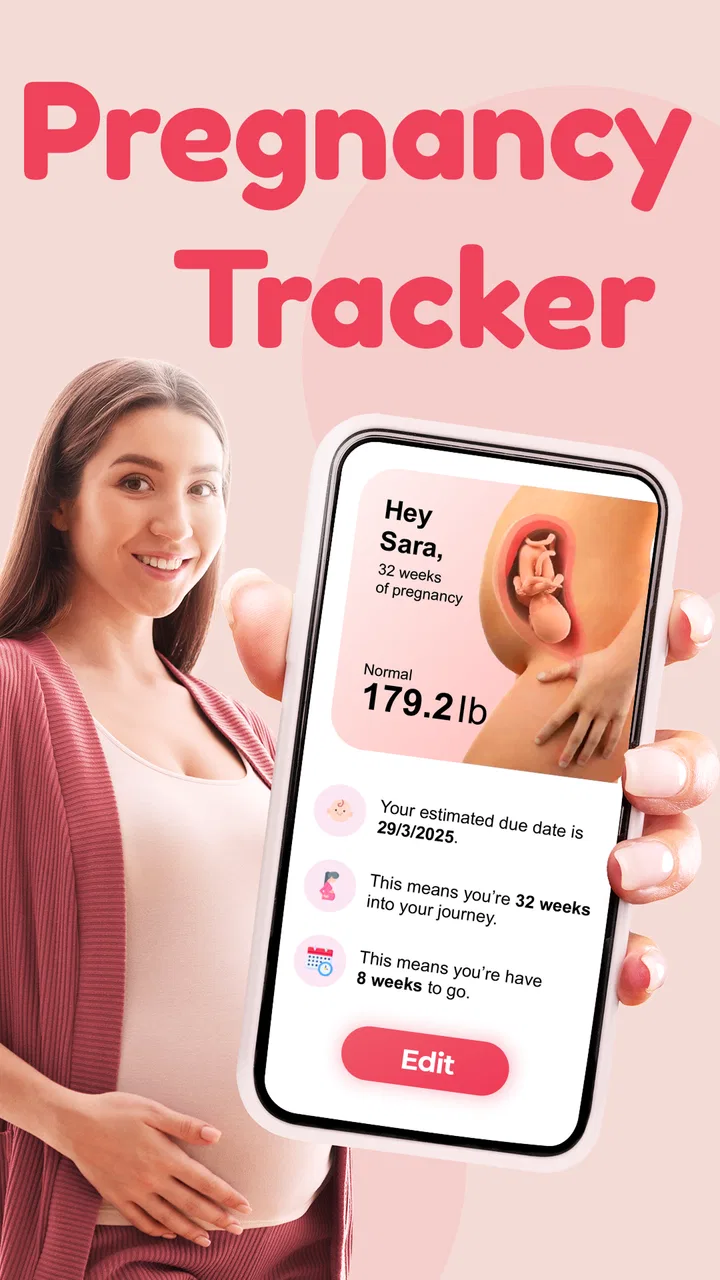
I came away from Track pregnancy & baby growth feeling that it is aimed at one very specific need: giving expectant parents a simple place to follow the changing rhythm of pregnancy. Its focus is not on turning pregnancy into a complicated dashboard. Instead, the app from Outlookdaily presents itself as a parenting companion built around week-by-week progress and day-to-day changes. That narrow focus is its biggest strength, although it also means it will not replace every kind of pregnancy resource.
I tested it with the mindset of someone who wants quick, readable guidance rather than a medical textbook. The app is free to start, available for Everyone, and has reached more than 500 thousand installs. Its average rating is 4.7, which suggests that many people find the basic experience useful. I would still treat those figures as a starting point rather than proof that it will suit every pregnancy, because the best choice depends on whether you want a calm tracker, detailed health logging, community support, or clinical tools.
How the current version fits into everyday pregnancy tracking
The current release is version 1.2.8, and the app was released on April 2, 2025. Those details matter because this is a relatively young product, not a long-established pregnancy platform with years of accumulated tools. My impression is that Outlookdaily is concentrating on making the central journey understandable: open the app, see where you are in pregnancy, and get a sense of what is changing now rather than sorting through a large archive of information.
You May Also Like

 Blood Strike: 2.5 Anniversary
Blood Strike’s Loadouts Turn Every Drop Into a Tactical Gamble
A close look at Blood Strike’s custom loadouts: how fast access to signature weapons reshapes its battle royale rhythm, rewards preparation, and narrows the gap between fights.

 Pandora - Music & Podcasts
Pandora’s Music Is Easy to Start, but Harder to Recover
Pandora’s strength is its low-effort path from a seed to a station. Its weak spot is how much confidence it asks you to place in connection, setup, and quiet recovery.

 8 Ball Pool
 Is Built on Rivalries, Rematches, and Routine
A close look at the rivalries, rematches, shared routines, and unanswered safety questions that turn a quick pool match into a persistent mobile community.

 Samsung Music
’s Quiet Strength Is Playing What You Already Own
Its reach comes less from spectacle than from dependable access to a personal library. That simplicity is both the app’s strongest retention engine and its ceiling.

 AccuWeather: Weather Radar
AccuWeather Review: A Quick, Clear Forecast for Everyday Decisions
For everyday plans, the best forecast is the one you can understand quickly. AccuWeather makes rain timing, radar, and local conditions easy to act on, with a few trade-offs.

 Hill Climb Racing
Why Hill Climb Racing Still Turns Crashes Into One More Run
A tiny car, a bumpy hill and one more upgrade: Hill Climb Racing keeps resurfacing because its simple chaos makes every near-miss feel personal.
More From Our News Desk



That approach works particularly well during busy mornings. Imagine checking the app while waiting for an appointment or during a quiet moment after breakfast. You do not necessarily need a long article. You may simply want to orient yourself around the current week, remember how far along you are, and look at the baby-growth context connected with that stage. A focused tracker can be more useful than a feature-heavy alternative when your attention is already divided.
The wording around day-by-day changes also gives the experience a more immediate feel than a calendar that only changes once a week. Pregnancy is often discussed in weekly milestones, but the lived experience is daily: symptoms shift, questions appear unexpectedly, and the same week can feel very different from one day to the next. I found that a daily view encourages short check-ins instead of one large information session.
That does not mean I would use it as a diagnostic tool. A pregnancy tracker can help organize personal awareness, but it cannot judge whether a symptom is harmless or urgent. If something worries you, a midwife, doctor, or other qualified professional remains the right source of medical advice. The app is most useful beside proper care, not in place of it.
A calmer workflow than a general-purpose health app
Compared with a general health app, this one has a clearer emotional and practical context. A broad health platform may ask you to manage exercise, nutrition, sleep, medication, and other goals in one place. That can be valuable, but pregnancy information may become just another tile on a crowded home screen. Here, the pregnancy journey is the reason for opening the app, so the experience feels more direct.
Compared with a paper journal, the digital format is easier for quick reference. You do not need to remember which page contains a particular week, and you can check the current stage without carrying anything. The trade-off is that a paper journal can be more personal and flexible. If you want long written reflections, drawings, appointment notes, or a keepsake made entirely by hand, a notebook will still feel better.
It also differs from discussion-based pregnancy communities. A community can answer the emotional question of whether other people have experienced something similar, while a tracker offers a private, structured view of your own progress. I would not choose this app expecting conversation, peer reassurance, or a substitute for professional support. I would choose it when I want less noise and more orientation.
What the release and version details tell existing users
For someone already using the app, the current version is a useful checkpoint. It tells you which build you are evaluating today rather than relying on an old impression from an earlier installation. Since the product is still developing, I would expect the experience to evolve, but I would separate that expectation from what is already visible. The dependable reason to use it now is the pregnancy-tracking structure, not a promise of future additions.
New users should also understand the pricing model before settling into a routine. The app is free, but in-app purchases range from $4.99 to $17.99 per item. That does not automatically make it poor value; many people may find the free experience sufficient. Still, I recommend checking what is available without paying and deciding whether any optional material genuinely improves your routine before buying. A pregnancy tracker should reduce stress, not create uncertainty about which screen requires payment.
This is one area where a short trial period of normal use is more revealing than a quick first launch. Check the app on several different days, not only when you are curious. See whether the week-by-week information is something you return to, whether the daily view feels helpful rather than repetitive, and whether the free portion covers the way you actually plan to use it. That simple test can prevent paying for features that sound appealing but do not become part of your habits.
Small habits that make the app more useful
My first practical tip is to use the app at a consistent point in the day. A morning check-in can provide a gentle orientation, while an evening check-in may work better if you want to reflect on how the day felt. The important part is not frequency for its own sake. It is creating a predictable moment so the tracker supports you instead of becoming another notification competing for attention.
My second tip is to treat weekly information as a conversation prompt. If the app highlights a change or stage that raises a question, write the question down for your next appointment rather than trying to solve it through repeated searching. This turns general educational content into something practical: a small list of topics to discuss with a professional.
A third useful approach is to share only the parts that are comfortable to share. You might use the app privately for personal orientation while discussing selected milestones with a partner or family member. Not every detail needs to become a group update. Keeping the tracker as a calm personal reference can protect the experience from outside opinions, especially when every pregnancy develops differently.
There is also a useful distinction between information and memory. If you want to preserve a personal record of feelings, appointments, or meaningful moments, do not assume that a progress tracker will serve as a complete journal. Use a separate note or journal for details that matter to you. The app can help you remember where you are in the journey, while another tool can hold the story of how that journey felt.
Who will appreciate the focused design
I think the app is a good match for first-time parents who want a straightforward way to understand pregnancy stages without committing to a complicated system. It can also suit experienced parents who do not need extensive education and simply want a quick reference for the current pregnancy. The week-by-week structure makes it approachable for someone who prefers small pieces of information instead of long reading sessions.
It may be especially helpful for a partner who wants to stay involved but does not know what is relevant at a particular stage. A short daily check can provide context for conversations without requiring the partner to study an entire pregnancy guide. Used together, it can become a shared point of reference, provided both people remember that the app’s general information cannot describe every individual pregnancy.
I would be more cautious about recommending it to someone who needs detailed symptom records, extensive appointment management, medication tracking, or direct clinical communication. Those needs call for a more specialized health tool or a system recommended by a healthcare provider. I would also suggest looking elsewhere if your main reason for downloading an app is community discussion, birth-plan collaboration, or a deep library of medical references.
People who dislike daily check-ins may also find the format unnecessary. Some parents feel calmer when they avoid constant pregnancy information and only discuss updates during appointments. In that situation, a tracker can become a source of overthinking rather than reassurance. The right test is whether opening it leaves you better oriented. If it makes you compare your experience too closely with a general timeline, use it less often or choose a simpler resource.
Where the experience still has limits
The central limitation is the distance between a general pregnancy timeline and an individual person. Week-by-week guidance can be comforting, but it may also create the impression that every change should happen on schedule. Real pregnancies do not follow a perfectly identical script. I would use the app to understand broad context, then avoid treating its timeline as a personal forecast.
The free-plus-purchases model is another point to consider. Even when an app offers useful free material, optional purchases can interrupt the feeling of simplicity if you are not sure what belongs to the basic experience. Before spending money, I would identify one concrete problem you want to solve. If the purchase does not address that problem, keep using the free portion or compare it with a different resource.
The app’s focused scope can also feel narrow after the novelty wears off. A daily growth view is useful when you want regular orientation, but it may not be enough for users who want a complete pregnancy organizer. In my view, that is not a flaw to hide; it is a choice to understand. This app works best as one calm layer in your support system, not as the only place where every pregnancy-related task lives.
There is a practical privacy habit I would recommend with any personal health app: share your phone only with people you trust, and think carefully before turning private pregnancy information into public updates. The app may be part of a deeply personal period, and responsible use includes deciding what remains on your device and what you discuss elsewhere. That advice is less about a missing feature and more about keeping control of your own experience.
What I would watch as the product develops
Because the app is still relatively new and has already moved to version 1.2.8, I would watch how Outlookdaily refines the balance between simplicity and depth. The most valuable improvements would be ones that make the daily and weekly views clearer without turning the app into an overloaded health suite. A useful update should help users act on information, not merely add more screens.
I would also pay attention to how optional purchases fit into the main journey. The strongest experience would make the free path easy to understand while giving paying users a clear reason to upgrade. For existing users, updates are worth judging by whether they reduce friction in regular check-ins, improve clarity, or make the information easier to discuss with a healthcare professional.
Another important area is how responsibly the app presents general pregnancy information. The best version of this product would keep reminding users, through careful wording and context, that a timeline is educational rather than diagnostic. That distinction matters most when an expectant parent is anxious and looking for certainty that no general tracker can provide.
My overall view is positive, with a clear boundary around what I expect from it. This is a focused pregnancy companion, not a complete medical system. I like the way its daily and weekly emphasis can fit into ordinary routines, and the free entry point makes it easy to decide whether the approach suits you. The 4.7 average from around 1.9 thousand ratings and its broad install base make it a credible option to try, but personal fit matters more than popularity.
I would recommend Track pregnancy & baby growth to someone who wants a gentle, organized view of pregnancy progress and is comfortable supplementing it with professional care and perhaps another tool for notes. I would skip it if you need advanced health records, direct clinical support, or a strong social community. For the right user, its restraint is refreshing: it gives the pregnancy journey a regular shape without demanding that the app become the center of it.
FAQs for Track pregnancy & baby growth
01What features does the Track Pregnancy & Baby Growth app offer?
The Track Pregnancy & Baby Growth app offers a comprehensive suite of features including weekly updates on fetal development, symptom trackers, appointment reminders, and personalized health tips. It also provides nutritional advice and exercise suggestions tailored to each stage of pregnancy. The app aims to support expectant parents by offering timely information and guidance.
02Is the Track Pregnancy & Baby Growth app free to use?
The app offers a free version with essential features such as basic tracking and weekly updates. However, there is a premium subscription available that unlocks additional features like advanced tracking, personalized tips, and ad-free experience. Users can choose the version that best fits their needs and budget.
03How accurate is the information provided by the app?
The Track Pregnancy & Baby Growth app relies on data from trusted medical sources and is regularly updated to ensure accuracy. It is advisable for users to complement the app's information with advice from healthcare professionals. Always consult with your doctor for personalized medical guidance and to address any specific concerns.
04Can I share my pregnancy progress with others using the app?
Yes, the app allows you to share your pregnancy milestones and progress with family and friends. You can customize updates and choose which information to share, making it easy to keep loved ones informed. This feature helps in creating a supportive community throughout your pregnancy journey.
05Is my data secure with the Track Pregnancy & Baby Growth app?
The app prioritizes user privacy and employs advanced encryption to protect personal data. It adheres to strict privacy policies and complies with relevant regulations to ensure your information remains confidential. Users have control over their data and can manage privacy settings within the app.
Pros
- User-friendly interface for easy navigation.
- Comprehensive weekly pregnancy guides.
- Personalized reminders for appointments.
- Tracks baby's growth with detailed visuals.
- Provides helpful tips for new parents.
Cons
- Limited features in the free version.
- Some users report occasional app crashes.
- Requires internet for full functionality.
- Ads can be intrusive at times.
- Limited customization of notifications.

Track pregnancy & baby growth
Gallery